
Cast Iron Tables in Industrial Environments: Where Durability Becomes Non-Negotiable
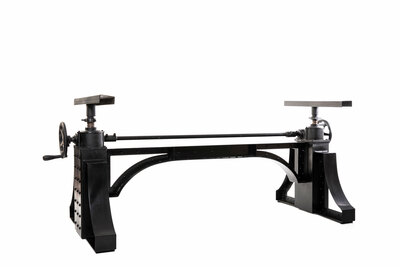
When you step onto a factory floor, a metal fabrication shop, or a logistics facility, you immediately notice that everything is built for a purpose. This is how leaders use Cast Iron Tables in Industrial Environments.
There’s no room for delicate finishes, lightweight fixtures, or furniture that can’t keep up with the demands of the day. In these environments, form must follow function, and function must never fail. That’s exactly why cast iron tables have become the go-to work surfaces in industrial settings across the globe.
Industrial workspaces are unlike any other. They’re loud, fast-paced, and physically intense. They’re filled with heat, vibration, tools, machines, and materials that can weigh hundreds of pounds. In this world, a table isn’t just a place to sit or rest a coffee cup—it’s an integral part of the workflow. It must withstand welding sparks, hammer strikes, repetitive motion, and the weight of everything from engines to sheet metal. If a table can’t hold up under those conditions, it’s a liability. Cast iron tables, by design and by nature, eliminate that liability entirely.
Let’s take a deeper look at how cast iron tables meet and exceed the performance requirements of industrial workspaces, and why they remain a preferred solution across fabrication shops, manufacturing floors, assembly lines, and logistics hubs.
Cast Iron Tables in Industrial Environments: Built for Heavy Work – Why Strength Isn’t Optional
In industrial environments, strength isn’t a nice-to-have—it’s the baseline requirement. Every piece of equipment, including the tables used for work, needs to support significant weight without flexing, shifting, or degrading over time. Cast iron tables do this better than nearly any other material.
Thanks to their dense, rigid structure, cast iron tables offer unmatched compressive strength. They resist deflection and movement under load, making them ideal for applications like welding, cutting, bending, and tool assembly. Unlike aluminum or hollow steel tables that may vibrate or warp under pressure, cast iron absorbs vibration, holds its form, and remains solid through years of constant use.
That’s particularly important in fabrication and machining, where flatness and stability directly impact accuracy. Cast iron work surfaces are often precision-ground to achieve perfectly level planes—known as platen or layout tables. These tables become the foundation for setting up jigs, measuring tolerances, and ensuring component alignment. If the table surface isn’t stable and true, the final product won’t be either.
Whether you’re assembling automotive components, cutting pipe sections, or tacking welds, having a cast iron table you can trust removes a major variable from your workflow. It means the table won’t move when you do. It won’t sag when pressure is applied. And it won’t flinch when sparks fly.
Cast Iron Tables in Industrial Environments: Resistance to Heat, Impact, and Repetition
One of the unique demands in industrial settings is exposure to extreme temperatures. Welding tables, in particular, must tolerate direct contact with hot materials, molten metal spatter, and intense radiant heat. Many metals lose their strength or become dangerously pliable when heated—but cast iron remains remarkably stable even under prolonged thermal stress.
This thermal resistance makes cast iron tables ideal for torch cutting, plasma cutting, or heat-based assembly work. They won’t deform, discolor, or become compromised with repeated exposure. They also dissipate heat quickly, reducing the risk of material fatigue or structural warping. Over time, this kind of performance contributes directly to safety and process consistency.
Industrial tables also take a beating—literally. Workers drop heavy parts, slam tools, and hammer fixtures into place dozens of times each shift. Cast iron’s ability to withstand repeated impact without cracking or chipping gives it a significant edge over other surfaces. Even if the finish wears or scuffs over time, the table remains fully functional. That durability translates into lower replacement costs, fewer work interruptions, and greater confidence in the workspace itself.
And then there’s repetition—an invisible enemy of weak materials. In warehouse sorting stations, assembly lines, and packaging areas, repetitive motion can cause bolts to loosen, welds to fail, or thin frames to sag. Cast iron tables, when designed for industrial use, resist fatigue even under continuous, cyclic loading. That’s why you’ll find them not only on welding benches, but in kitting stations, parts inspection lines, and production staging areas.
A Foundation for Precision and Customization: Cast Iron Tables in Industrial Environments
Industrial cast iron tables don’t just hold weight—they create a platform for precision. In metal fabrication shops, layout tables are used for squaring frames, measuring weldments, and checking tolerances before final welding or finishing. The accuracy of the table surface becomes a critical part of the quality control process.
Some cast iron workbenches include grid systems, threaded holes, or T-slots that allow workers to mount jigs, clamps, and fixtures with repeatable accuracy. This transforms the table into a modular workholding system that increases throughput and improves ergonomic safety. Components can be locked into place, rotated, adjusted, or removed with minimal effort, and the cast iron base doesn’t move or distort under strain.
Customizability also makes cast iron tables attractive for specialized industries. Manufacturers can specify sizes, heights, finishes, and features such as integrated drawers, power access, or tool rails. For example, a manufacturer building electronic panels might need anti-static surfaces and integrated grounding. A robotics assembly station may require extra-wide bases and multiple mounting points. A QC lab may want a clean, polished surface with zero flex under sensitive equipment. Cast iron can accommodate all of these needs without compromise.
Cast Iron Tables in Industrial Environments: The Role of Cast Iron Tables in Modern Warehousing
Beyond traditional manufacturing and fabrication, cast iron tables are becoming more common in warehousing and logistics centers. These facilities are increasingly complex and rely heavily on fast, accurate material handling. While automation plays a growing role, human workstations are still essential—especially for packaging, sorting, labeling, and quality inspection.
In these fast-paced environments, tables must support everything from bulk inventory to delicate parcels. They are loaded and unloaded dozens or hundreds of times per day. They must remain level, secure, and unshaken by conveyor belts, forklifts, or environmental vibrations. Cast iron’s ability to stay rooted, resist wear, and support large distributed loads makes it a perfect match.
In some warehouse operations, cast iron tables are integrated into racking systems or work cells, where workers assemble pallets, prepare shipments, or run quick inspections on incoming goods. In these cases, durability is critical—not just for safety, but for workflow efficiency. A weak table slows workers down. A solid one speeds them up.
As e-commerce continues to expand and logistics networks become more distributed, the need for modular, rugged, and long-lasting work surfaces will only grow. Cast iron tables deliver that performance without the need for constant replacement, making them an ideal long-term asset for warehouse managers.
Cast Iron Tables in Industrial Environments: Designed for Efficiency, Engineered for Longevity
One of the most underappreciated benefits of cast iron tables in industrial environments is how they enhance operational efficiency. Workers learn to trust these tables. They become reliable parts of the shop or line, absorbing the daily stresses of production without requiring babysitting. No loose bolts. No weak welds. No mystery shakes. That consistency frees workers to focus on what matters—precision, output, and safety.
In high-output facilities, downtime is the enemy. When tables break or degrade, repairs or replacements take time and money—often in the middle of a busy production window. By investing in cast iron from the start, industrial teams avoid that disruption. They gain stability and peace of mind. Over time, this translates to major savings—not just in furniture costs, but in labor efficiency, quality control, and reduced incidents of equipment-related injury.
It also plays into a broader operational strategy: buy once, use forever. While cast iron tables may cost more upfront than lighter-duty alternatives, their lifespan dramatically outpaces their peers. It’s not unusual to find cast iron shop tables in use after 20 or 30 years—often still functioning exactly as they did when new. In environments where capital expenditures are closely watched, this kind of durability pays back in spades.
The Sustainable Edge of Built-to-Last Equipment for Cast Iron Tables in Industrial Environments
Sustainability may not be the first word that comes to mind in an industrial setting—but it should be. As companies prioritize waste reduction, energy efficiency, and resource stewardship, cast iron tables quietly support those goals.
Because they last for decades, they reduce the need for frequent replacements and the environmental costs of manufacturing, shipping, and disposal. They also eliminate the ongoing waste associated with failed equipment—no bent frames going to scrap every few years. And when they do reach the end of their useful life, cast iron tables can be recycled entirely, often remanufactured into new products with no loss in quality.
For companies participating in LEED certification, ESG initiatives, or supply chain transparency programs, investing in long-lasting infrastructure like cast iron tables sends a clear message: we build for the long term, and we care about what we leave behind.
Cast Iron Tables in Industrial Environments: Built for the Work That Never Stops
In the industrial world, strength isn’t a luxury. It’s a necessity. And when that strength comes in the form of a table—one that doesn’t budge, doesn’t break, and doesn’t demand attention—it becomes more than furniture. It becomes infrastructure. Cast iron tables bring that infrastructure-level reliability to workshops, factories, and warehouses across industries.
They endure heat, impact, weight, and time. They offer precision where it matters most. They serve teams, not just individuals. And they prove, day after day, shift after shift, that the right equipment is never the problem—it’s always part of the solution.
Get In Touch to Learn More About Our Cast Iron Tables
Cast Iron Tables Contact Information

Call us
602.821.7340

Email Us

Store Hours
Monday - Friday
8 AM – 6 PM Eastern

Visit us
53 Old Farm Road
Stowe, VT 05672
Cast Iron Tables
Discover the perfect blend of enduring strength and refined elegance with our cast iron tables. Each piece is meticulously crafted to deliver unmatched durability, ensuring your table stands strong for years to come.
The timeless appeal of cast iron brings a touch of sophistication to any space, while the intricate designs and flawless finishes highlight the artistry behind every table.
Elevate your home or workspace with furniture that not only captivates with its beauty but also promises unwavering quality and resilience.
Store Location
53 Old Farm Road
Stowe, VT 05672
Open Monday - Friday
8 AM - 6 PM Eastern